
Humming works, but not for the reason you were told
Twenty-four people, four ways of breathing, and a finding that takes the mysticism out of it gently.

You have probably been told to hum.
It turns up everywhere now. Hum to calm yourself. Hum to tone the nerve that runs from your throat to your belly. The explanation usually involves vibration, as though the sound were a hand reaching inside you and smoothing something down.
It is a lovely idea. I have repeated versions of it myself.
Earlier this year, a small group of researchers decided to test whether the sound is the part that matters.
Twenty-four healthy adults took part over five consecutive days, with their breathing and heart rhythm recorded while they tried four different things.
In one, they simply sat and rested. In another, they breathed deeply, the ordinary way you would if someone told you to take a deep breath. In a third, they hummed on the out-breath, a plain closed-mouth mm.
In the fourth, they hummed again while wearing noise-cancelling earphones. The hum was the same. What reached their ears was not.
That last one is the clever part. It separates the sound from the act of making it.
Here is what happened to the body.
Sleep Like A Baby Tonight (Try This 30-Second Sleep Trick)
Today I’m sharing a simple sleep trick that will help you sleep like a baby no matter how bad your sleep is today.
A few years ago, a top sleep scientist working with one of the biggest drug companies in the U.S. stumbled on something extraordinary…
A 30-Second “Sleep Trick” that actually helped people sleep deeper and longer — without pills, gadgets, or weird rituals, side effects, or sedatives.
And was fixing people’s sleep for good!
And that’s exactly why the company shut it down.
Because once people fixed their sleep... They stopped buying their high melatonin pills.
So, this doctor walked away…
He quit. Left Big Pharma behind — and dedicated his life to helping people sleep like babies again… naturally.
Today, his 30-second sleep trick is finally available to the public — and it’s already helping thousands fall asleep faster, stay asleep all night long and wake up truly rested.
→ Click here to try it tonight!
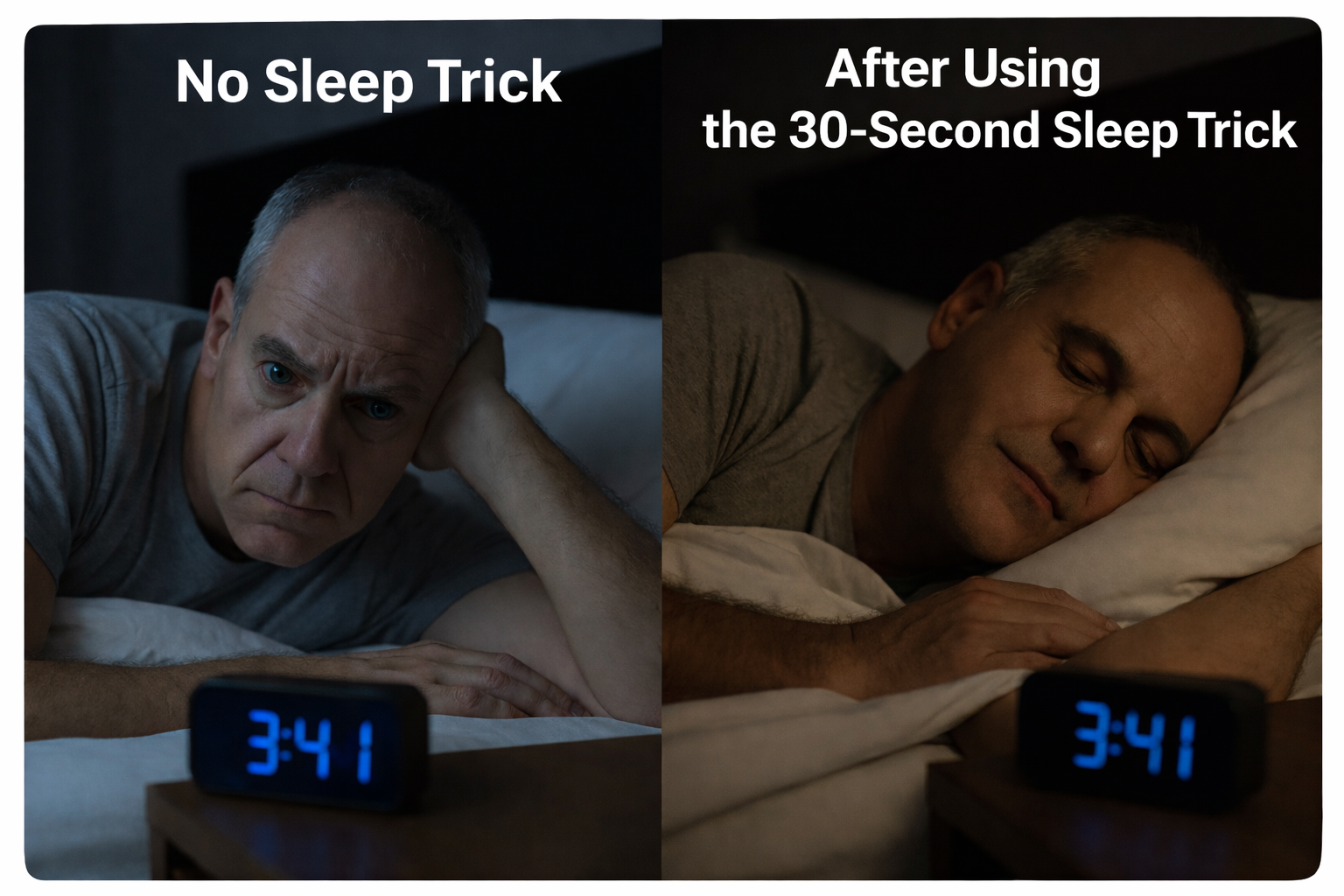
It’s shockingly simple. You’ll wonder why no one told you this before…
The average sleep score in the US is 41 out of 100, however people who use this 30 seconds sleep trick consistently average 80+.
So, go ahead and check it here!
Sleep well tonight,
P.S. Jessie D. from Maryland shared: “I used to wake up tired every day. Now that I fixed my sleep, I feel like I’m 20 again and the skinny jeans I haven’t worn in years, almost fit!”
→ Try this 30 seconds sleep trick tonight to sleep like a baby once again!
The humming slowed their breathing down, to roughly six cycles a minute. Not just slower than resting. Slower and steadier than plain deep breathing, too.
Their heart rhythm loosened as the breath settled. The beat-to-beat variation widened, which is generally the sign of a body moving out of guard and into something more restful.
Plain deep breathing lifted that measure too, compared with resting. Humming simply made the slow breathing easier to land on, and steadier once there.
And the earphones made no difference at all. Not to the breathing. Not to the heart.
The researchers were direct about what that means. The effect appeared to come from the slow, extended out-breath that humming forces, rather than from the vibrating sound itself.
Which is a quietly deflating sentence, if you have grown fond of the mystical version.
I want to sit with it rather than hurry past, because there is something freeing in it.
You cannot hum and rush your exhale. The sound will not let you. It stretches the breath out for as long as the note lasts, and it gives you something to do while it happens, so the mind has less room to interfere.
That is not magic. It is better than magic. It is a piece of scaffolding that works whether or not you believe in it.
Now the part I will not skip.
When they asked people how they felt, nothing moved. Stress, anxiety, relaxation, confidence. Across the breathing conditions, the ratings came out much the same.
So the body settled measurably, and the feeling of settling did not follow, at least not in a way twenty-four people could report after a single session.
This is worth knowing, because it is the gap most of us fall into. You do the practice. Your body does quietly shift. But you are checking your mood for evidence, and the mood has not caught up yet, so you decide it did not work.
The evidence and the sensation run on different clocks.
Some care with the study, because you deserve it. Twenty-four people is very few. They were healthy, and they did this sitting in a laboratory over a handful of days. The researchers call it preliminary themselves, and they mean it. Nothing here tells us what humming does over weeks, or what it does for a body that is deeply worn down.
So take it as a small, honest signal rather than a promise.
If you would like to try it, there is nothing to learn.
Sit however you are sitting. Let one ordinary breath in through the nose.
Then close your mouth and hum a single low note, any note, and let it run until it runs out on its own. Not forced. Just followed to the end.
Let the next breath come in when it wants to.
Three or four of those is enough to notice something. Perhaps a slight heaviness in the shoulders, or a change in the sound of the room.
And if you notice nothing, that is the ordinary result. Your breath still slowed. Your heart still loosened. The feeling may arrive later, or not at all today.
Hum anyway, if you like the sound of it.
The mystical explanation was never the reason it worked. You were simply breathing out slowly, which is one of the oldest ways a body has of telling itself it is safe.
May your next breath out be longer than you meant it to be.
With you in the quiet, Quantum Wave